

As November casts its quiet shadow, we pause to remember those who gave their all in service and sacrifice. In the spirit of Freemasonry—bound by brotherhood, duty, and reverence—we honor their memory and reflect on the enduring values they stood for. Let us wear the poppy with pride, and keep the flame of remembrance burning bright. It is in this spirit that we repost this feature - enjoy reading!!
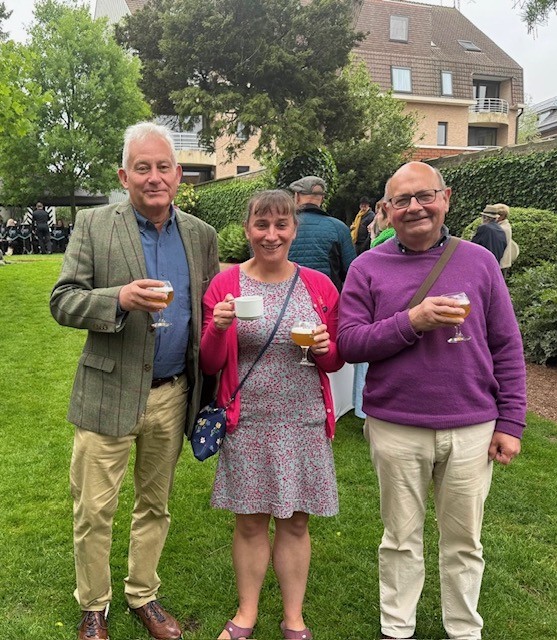
Bro. Ross Weaver has recently spent time with Rosie and Tony Baron - Rosie works for The Joint Casualty & Compassionate Centre based in Imjin Barracks near Cheltenham - also known as the War Detectives and Tony is a WW2 and radio expert.

The Ministry of Defence through the Joint Casualty & Compassionate Centre is responsible for the research, identification and burial of all British casualties worldwide. The Commonwealth War Graves Commission (CWGC) cares for the graves, memorials, records and memory of the 1.7 million Commonwealth servicemen and women who died during the two world wars.
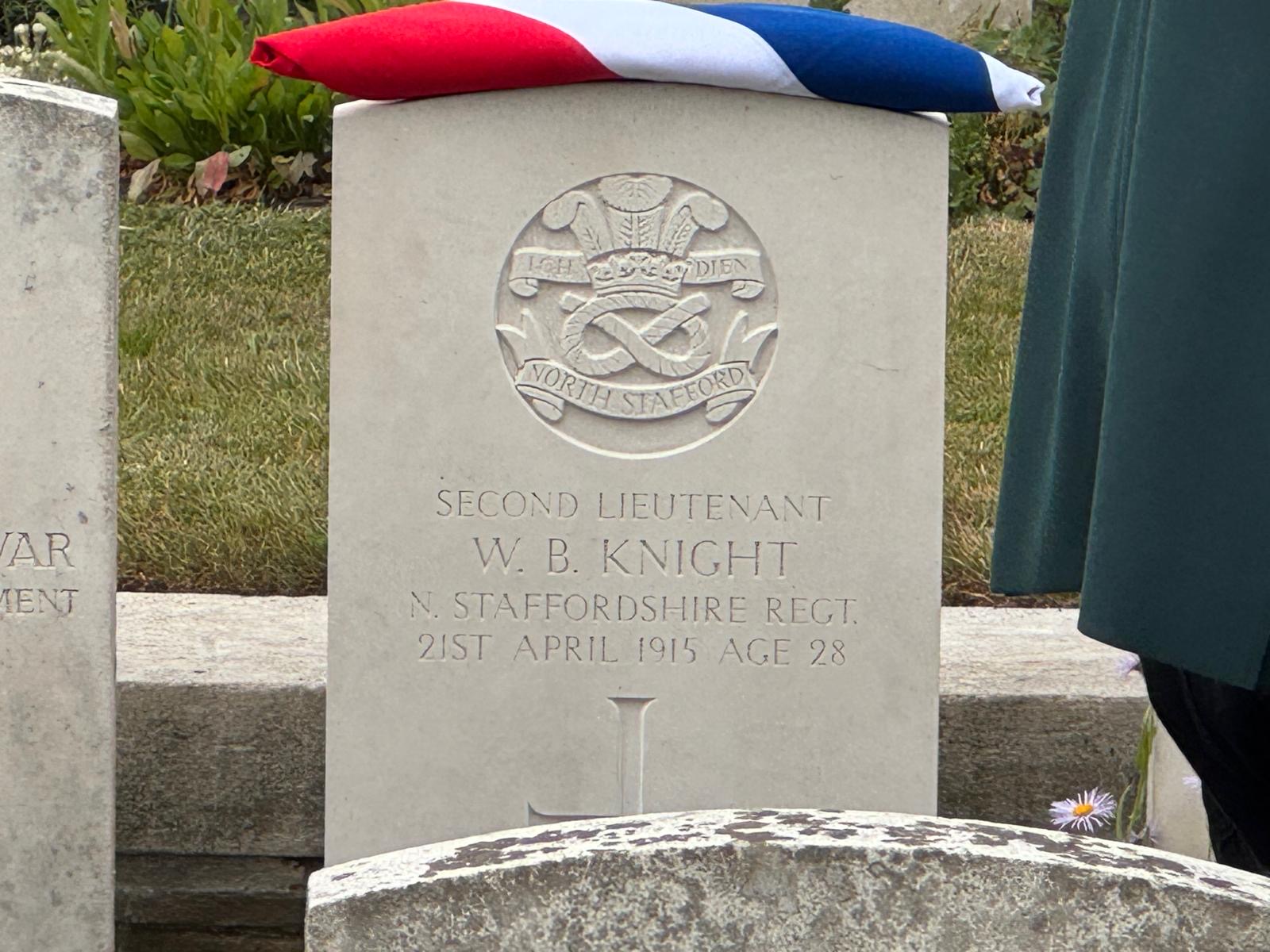
In April 1924 the remains of an unknown officer of the North Staffordshire Regiment were recovered from a location on Hill 60 to the south of Ypres. At the time his officer status and Regimental Affiliation were established from his uniform badges and buttons, but he was carrying nothing which could fully identify him so he was buried as an Unknown Officer of the North Staffordshire Regiment at Oosttaverne Wood Cemetery.
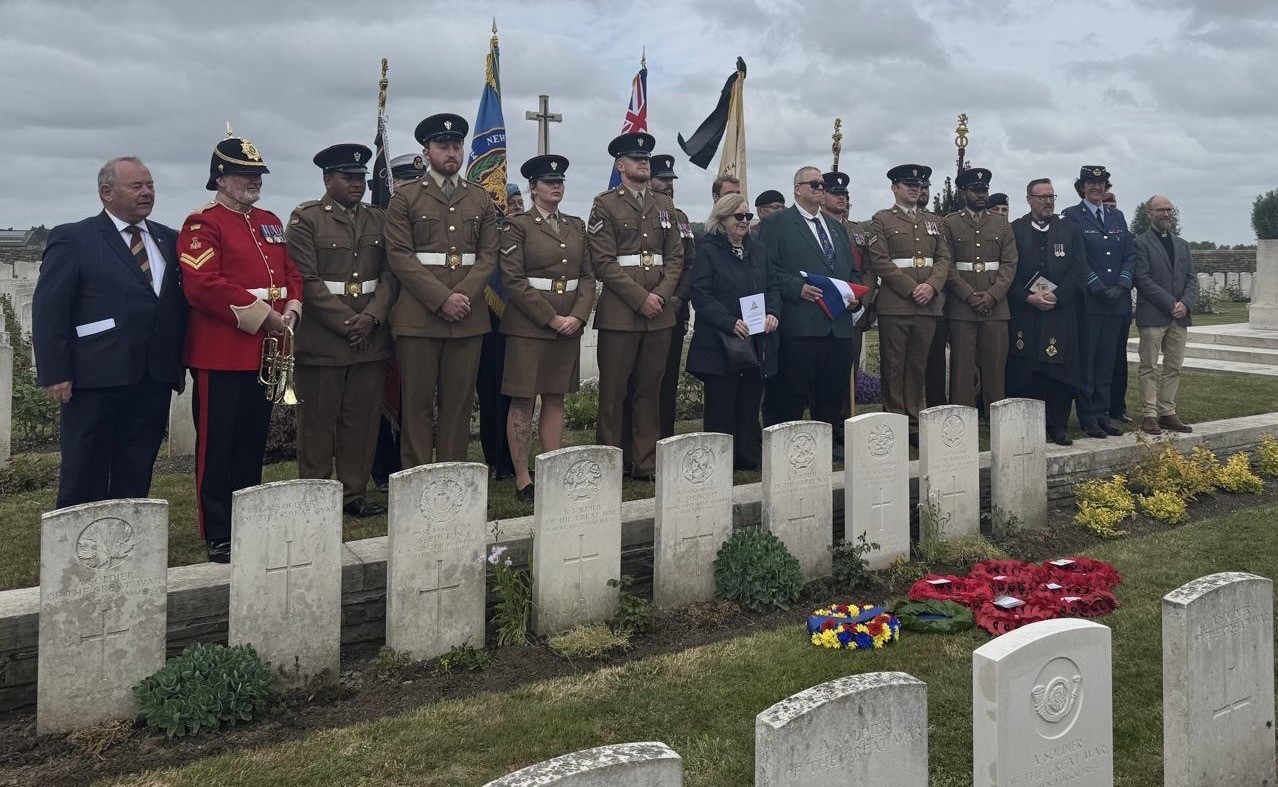
Now enter the War Detective Rosie and team who recently, after extensive research have revealed that 2Lt Knight is the only man missing in this part of Belgium who could possibly match the description of the unknown officer. Finally, after 110 years we know the final resting place of 2Lt Knight and were able to reunite his physical remains with his name. And on the 22nd May 2025 Rosie, Tony and Ross had the honour of attending the a very moving rededication of his grave at Oosttaverne Wood Cemetery.
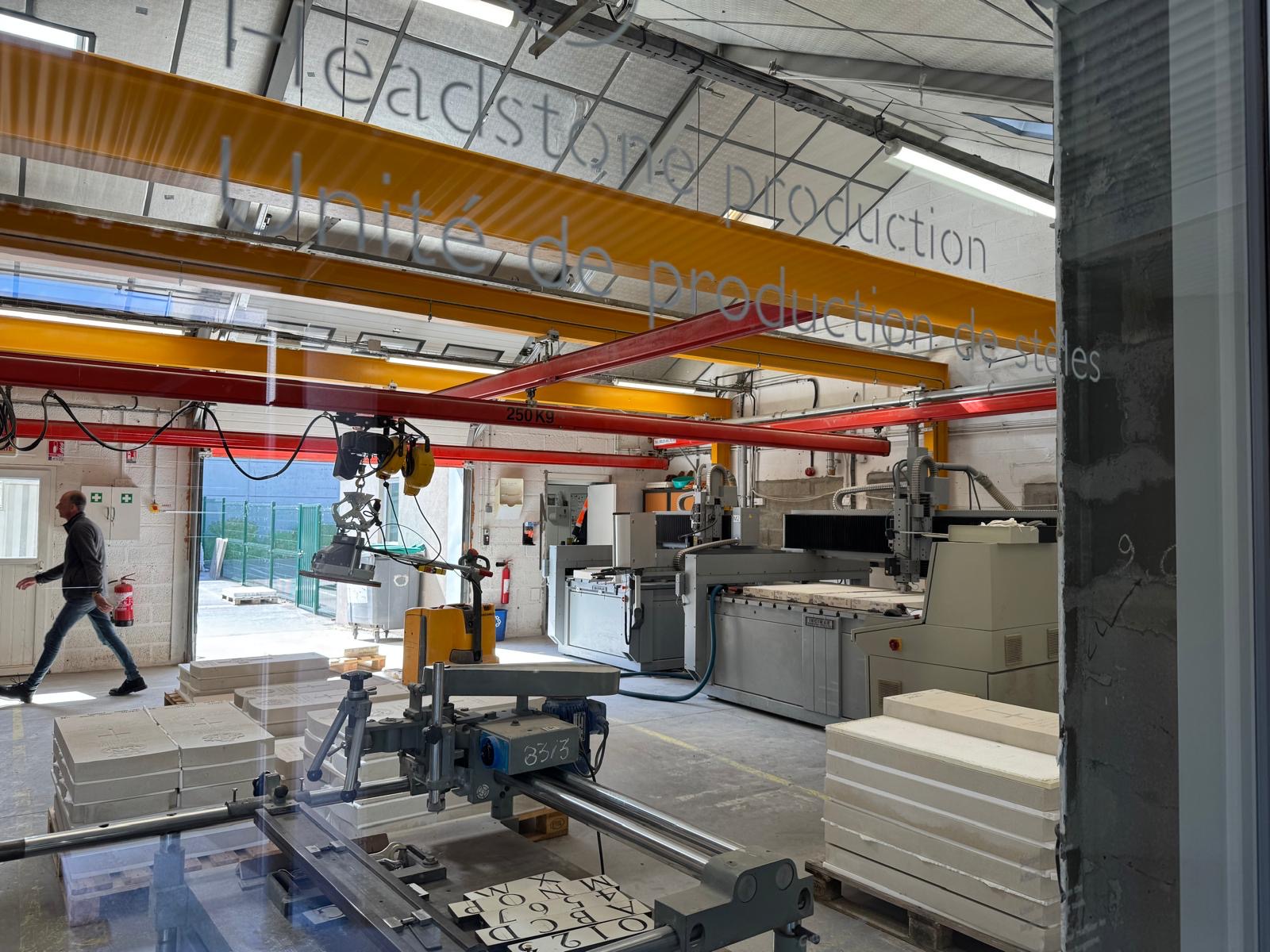
The CWGC in Arras is a huge site and they produce all the headstones globally including (as they did for Lt Knight) replacing and updating the detail on the stones once someone is identified. They also recently refurbished the Menin Gate and arrange the re burials with full military honours.
One of the key people that created the wording for headstones, memorials and worked on the details was Rudyard Kipling after his son Jack was killed in Gallipoli. Rudyard Kipling was a Freemason who was initiated into the Lodge of Hope and Perseverance, No. 782, E.C., at Lahore, on the 5th of April, 1886.
CWGC cares for the graves and memorials of Commonwealth servicemen and women who died during the World Wars, but it's not directly connected to Freemasonry as a formal organization. While the CWGC commemorates all those who died in service, the Masonic Great War Project provides a searchable database specifically focused on Freemasons who died during wartime. The CWGC's role is to ensure remembrance of all those who died, while the Masonic project focuses on the specific contributions of Freemasons
The CWGC was founded by Major General Sir Fabian Arthur Goulstone Ware. He was a Freemason and instrumental in establishing the commission's Royal Charter in 1917, according to the Provincial Grand Lodge of East Lancashire. Other Freemasons involved in the commission's early work included Sir Reginald Blomfield, an architect who designed the commission's sites.
During the same visit, the intrepid War Detective team visited Talbot House which is a historic building in Poperinge, Belgium. During the First World War, this small, quiet town in Belgium was overrun with the business of war. As the town was located on the main route to Ypres and the Western Front, there was a constant flow of soldiers, supplies lorries and trains. Over the course of the War, millions of men passed through, either on their way to the front or returning battle weary and exhausted. The town became overrun with soldiers, all looking for relief and respite from the trenches.
The sign that hung above the door read “All rank abandon ye who enter here.”
Anyone who entered did so as a human being and not as a soldier or an officer. Orders were prohibited. Talbot House was to be a place where people could forget about the war – even if for just a moment. The kettle was always on, there was always someone to chat to and there was always a quiet space to reflect. Over the course of the War, more than half a million soldiers visited the House. During the Battle of Passchendaele in 1917, it was visited by 5000 men per week. And on one day more than 4000 cups of tea were served.
Interestingly and a matter that all Freemasons should be proud of is that The United Grand Lodge of England (UGLE), played a significant role in supporting Talbot House and its activities. UGLE encouraged Freemasons to volunteer at the house and provide support to the soldiers stationed there. While Talbot House is not a dedicated Freemason hall, it was used as a retreat and meeting place for Freemasons, particularly during World War I.
On the 25th of January 2024 Tim Henderson-Ross, at that time our Provincial Grand Master signed the Armed Forces Covenant in the Imjin Barracks near Gloucester.
“The Armed Forces Covenant is quite simply a pledge by any organisation choosing to sign it, to ensure anybody that is serving, or has served, or a family member of someone that is serving in our Armed Forces shouldn’t face any disadvantage. That could be in areas such as education, healthcare and especially employment.”
The Prince of Wales Lodge is extremely proud to be associated with the The Armed Forces Covenant and we thank Rosie and Tony for the tremendously important work that they do as part of The Joint Casualty & Compassionate Centre in identifying the remains of our fallen Heroes.
We will Remember Them.
 Login
Login
 Register FREE!